Nigeria Must Rise Above Perfidy.
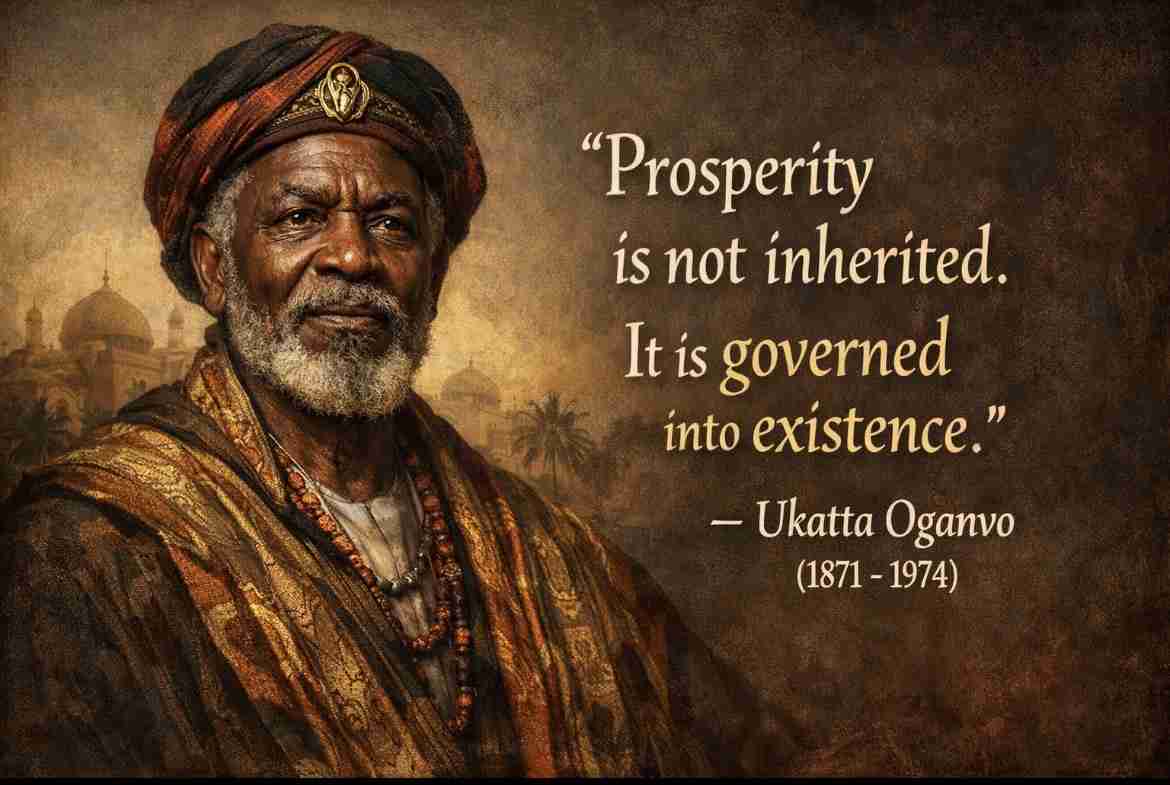
Prosperity is not inherited. It is governed into existence - Ukatta Oganvo (1871 - 1974).
Why Nations Fail by Daron Acemoglu and James A. Robinson is a compelling inquiry into why some societies achieve lasting prosperity while others remain trapped in poverty. Its central claim is deceptively simple; nations rise or fall largely because of the political and economic institutions they construct. Geography, culture, and resources matter far less than how power is organised and how opportunity is distributed.
To illustrate this argument more vividly, we look at the divided city of Nogales.
On one side is Nogales, Arizona, part of the United States, and on the other is Nogales, Sonora, part of Mexico. The two communities share the same climate, ancestry, and history. Families live on both sides of the fence. Yet their standards of living are strikingly different. Incomes, education, healthcare, and public safety are far stronger in the north than in the south.
The absurdity is unavoidable; a few metres of boundary line separate two worlds.
Acemoglu and Robinson use Nogales to dismantle popular explanations for inequality. If geography were decisive, both sides would look alike. If culture were the key, shared traditions would produce similar outcomes. If natural resources determined prosperity, neither side would stand out. Instead, the difference lies in institutions.
The American side benefits from “inclusive institutions”, systems that distribute political power widely and protect economic participation. Property rights are enforced, courts function reasonably well, leaders can be removed through elections, and businesses operate with predictable rules. These conditions encourage investment, innovation, and long-term planning.
By contrast, the Mexican side reflects more “extractive institutions,” shaped by a history of elite dominance and weak accountability. Political influence is concentrated, corruption is more prevalent, and economic rules often favour narrow interests. For ordinary citizens, effort does not always translate into reward, and opportunity remains uncertain.
The fence, therefore, is not merely physical, it separates two incentive systems. It determines whether ambition is nurtured or frustrated, whether trust in the state grows or collapses. Nogales becomes a living experiment in how governance shapes human destiny.
From this local example, Acemoglu and Robinso build a global theory. They trace how political struggles, revolutions, reforms, and power bargains, produce institutions that persist for generations. Where elites fear competition, they suppress innovation. Where power is constrained, societies tend to flourish.
This framework is especially relevant to our dear country Nigeria and most African states.
Nigeria is rich in human talent, natural resources, and entrepreneurial energy. Yet it continues to struggle with unemployment, insecurity, infrastructure deficits, and widespread poverty. Like Nogales, the problem is not primarily geography or culture. It is institutional.
Many of Nigeria’s challenges reflect extractive tendencies; weak rule of law, politicised courts, opaque public finance, patronage networks, and limited accountability. Economic success is often linked to proximity to power rather than productivity. Public office becomes a route to private enrichment, not public service. The resultant consequence in our environment is that citizens rationally distrust institutions, and long-term investment suffers.
The lesson from Why Nations Fail is not that Nigeria lacks capable people or noble traditions. It is that its institutional incentives frequently reward the wrong behaviour.
First, Acemoglu and Robinson underscore the importance of credible property and contract rights. When entrepreneurs fear arbitrary taxation, seizure, or regulatory harassment (as has become the lot of Nigerian entrepreneurs), they underinvest. Strengthening judicial independence and regulatory transparency is therefore not a technical luxury but a development necessity.
Second, political inclusion matters. When large segments of society feel excluded from decision-making, politics becomes zero-sum and violent. Expanding internal party democracy, protecting electoral integrity, and decentralising meaningful authority can help transform politics from competition for spoils into competition over ideas.
Third, state capacity must serve the public, not factions. Efficient tax systems, professional civil services, and accountable security institutions are foundations of inclusive growth. Without them, even well-designed policies fail in practice.
Finally, the Nogales example warns against fatalism. Mexico’s side is poorer, but not doomed. Its condition is the result of historical choices. Likewise, Nigeria’s difficulties are not inevitable. Institutions are human creations, shaped by struggle and reform.
To its credit, Why Nations Fail does not promise easy solutions. Institutional change is slow, contested, and uncertain. Elites rarely surrender privileges voluntarily. Acemoglu and Robinson insist, and rightly so, that transformation is possible when citizens organise, demand accountability, and build coalitions for reform.
In the end, Nogales is more than a border town. It is a mirror. It shows how invisible rules structure visible lives. For Nigeria, the message is clear; development will not come primarily from oil, aid, or slogans, but from rebuilding institutions that reward honesty, protect effort, and constrain power.