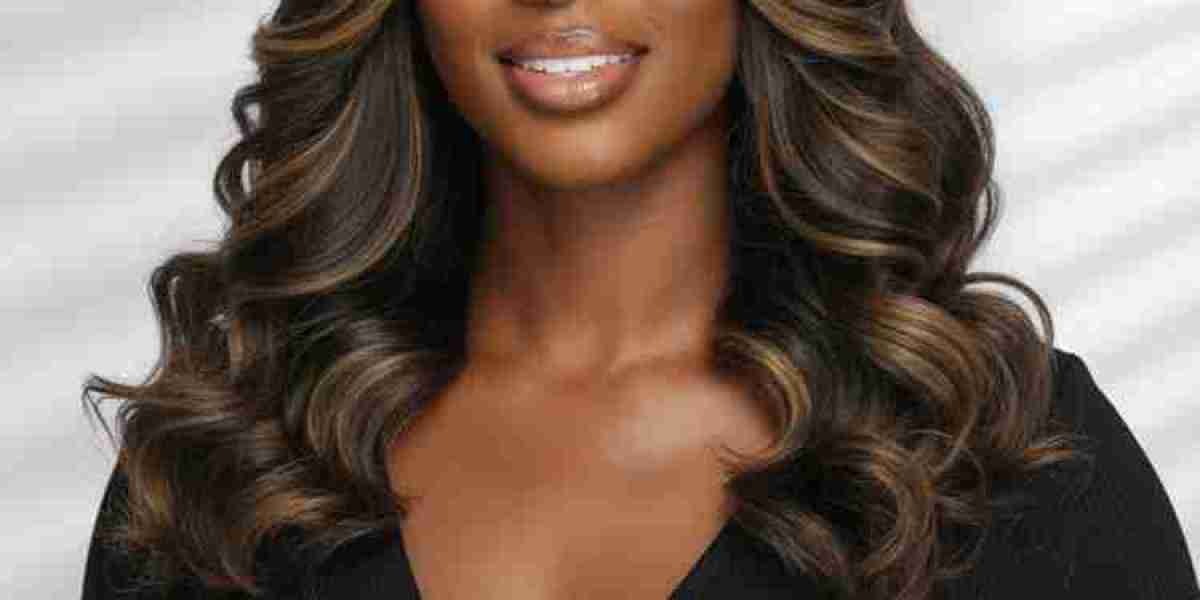

How to distinguish real wigs? Understand the core gap between texture and craftsmanship
In the current era where wigs are becoming increasingly popular, many people have fallen into confusion when choosing. There are a wide variety of genuine and fake hair products on the market, with similar appearances and vastly different prices, making it difficult for ordinary consumers to distinguish between good and bad. Many people blindly buy wigs based solely on style and price, and ultimately end up with stiff, fake, and difficult to use wigs that are prone to breakage. This not only fails to achieve the effect of enhancing appearance, but also wastes money for nothing. In fact, the difference between real wigs is never in appearance, but in the details of hair material, production process, wearing texture, and service life. Understanding these core differences can easily avoid purchasing errors and choose high-quality wigs that fit the natural and durable hair texture.
The most essential and intuitive criterion for distinguishing real wigs is the difference in hair raw materials, which is also the fundamental reason for the vastly different textures between the two. The real hair wig uses natural human hair, which has been carefully screened and gently processed to fully preserve the hair's scale structure. The hair texture is natural and smooth, with even and moderate thickness, and feels soft and smooth to the touch, just like our own hair. Its luster is a natural matte soft light, warm and not dazzling. It will not appear white or reflective plastic under sunlight and light, and will blend seamlessly with its own hair without any visible wearing marks. Wigs, on the other hand, often refer to inferior products made from industrialized fibers, relying on synthetic fibers made from chemicals. The hair structure is regular and rigid, with uniform thickness and rigidity. The surface has a thick coating luster, also known as cheap plastic light, which can be easily recognized at a close observation. It feels dry and rough to the touch, and friction can easily generate static electricity. It is easy to deform and break when gently pulled.
In addition to the basic material, the differences in craftsmanship details of real wigs directly determine the realism and delicacy of hairstyles. High quality real hair wigs are mostly hand crocheted, with craftsmen strictly following the natural direction of human hair growth, meticulously crocheting each strand and area, restoring the state of human hair growing in a staggered manner, without any neat or stiff feeling. Paired with an ultra-thin simulated scalp mesh base, it replicates the texture, head spin, and parting of the real scalp. The hair density is well proportioned and the layers are distinct, allowing for natural and agile hair lifting, tying, and parting. The roots are fluffy and light, without the discomfort of heavy clumping. On the other hand, synthetic fake wigs are mostly woven in high-density batches by machines, with hair arranged too neatly and densely, resulting in a rigid and rigid overall structure. The roots are thick and flat, and the stitching is deliberately stiff. The scalp position is false and thick, without a natural fluffy layer. After tying the hair, obvious stitch marks will be exposed, and the shape is rigid and inflexible, making it difficult to create a natural atmosphere.
The huge difference in wearing experience is also an important basis for distinguishing real wigs, and it is also the key to daily comfort. The bottom mesh of real hair wigs is often made of lightweight and breathable medical grade mesh material, with a light and thin texture that fits the curvature of the head. The mesh is fine and transparent, with excellent breathability and sweat wicking ability. Even if worn for a long time, during summer travel or daily exercise, there will be no problem of scalp stuffiness, sweat accumulation and itching, truly achieving seamless wearing. At the same time, the head circumference conforms to ergonomics, with elastic fit and stable fixation. It is not easy to slip off during daily activities and will not be worn out for a long time. However, in order to control costs, ordinary synthetic wigs have thick and blocked bottom nets, rough materials, and extremely poor breathability. After wearing, the scalp becomes stuffy and sweaty, which can easily breed oil and bacteria, causing discomfort to the scalp. Moreover, the pattern is stiff and does not fit the head shape. It is either tight and tight, or loose and slippery, making it bulky and cumbersome to wear. The discomfort will become more pronounced after prolonged use, making it completely unsuitable for daily long-term use.
The durability and practicality of real wigs are the key to widening the cost performance gap. True hair wigs have extremely strong plasticity because they are made from natural human hair, which is consistent with our own hair characteristics. They support daily hair care, hair styling, perming, dyeing, and color changing, and can change hairstyles according to clothing and style. Under reasonable daily maintenance, hair strands are not easily tangled, dried up, or deformed, and can maintain a smooth and fluffy state for a long time. The service life can reach several years, and the long-term cost-effectiveness is extremely high. However, synthetic fake wigs have extremely poor stability and are short-term consumables that cannot withstand high temperature styling and dyeing. After washing and care, they are prone to tangling, frizz, deformation, and pilling. After wearing them for a period of time, they will turn yellow, fade, and lose their hair. Even with careful maintenance, they can only be used for a short period of time and require frequent replacement. Although they may seem cheap, their cost-effectiveness is extremely low.
Understanding the core differences of real wigs is not about deliberately struggling with product categories, but about jumping out of the low price trap and choosing wig products that truly suit oneself. If it is only occasional photography or temporary styling, disposable synthetic wigs can meet short-term needs, but if it is for daily commuting, long-term wear, used to modify hair volume and hairline defects, the natural texture, comfortable experience, and durability of real hair wigs cannot be replaced by ordinary wigs. By examining the differences in material, craftsmanship, experience, and lifespan of halal wigs, one can make precise choices and easily achieve natural and realistic hairstyles, achieving effortless upgrades in appearance.