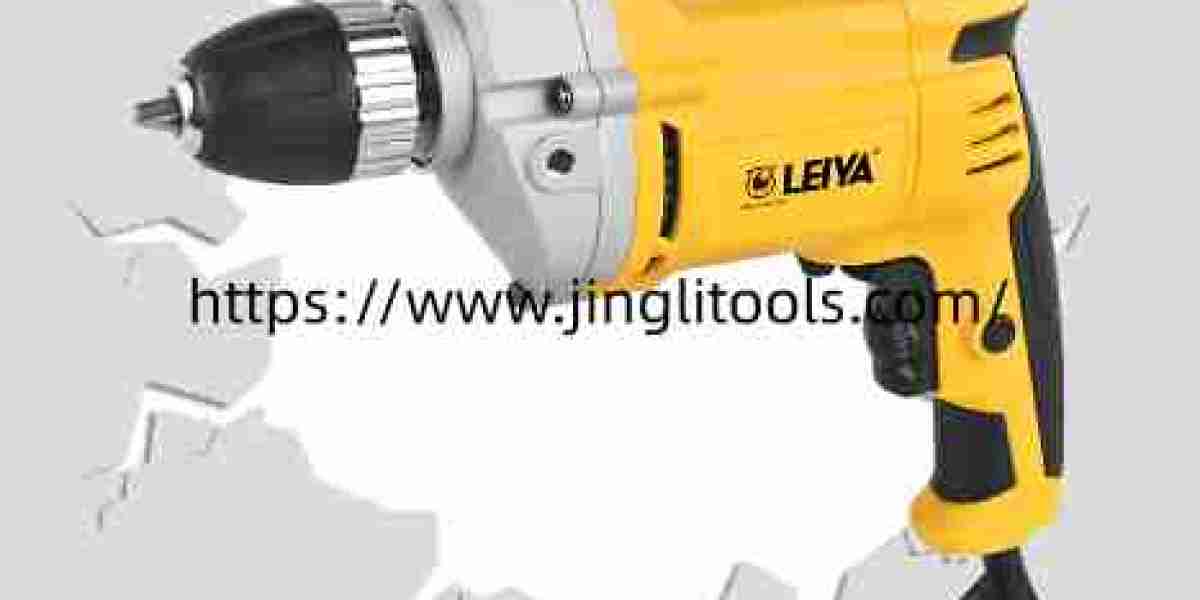

Drilling Machine is widely used in construction, woodworking, metal processing, and general maintenance work where accurate hole positioning is required. In daily use, accuracy depends not only on the tool itself but also on operator technique, workpiece stability, and environmental conditions. Understanding these factors helps improve consistency and reduce errors during operation.
One of the most important factors affecting accuracy is workpiece fixation. If the material is not properly secured, even a small movement during operation can lead to misalignment. Using clamps or stable supports helps ensure that the material remains in position throughout the process, allowing for more controlled and precise results.
Marking the drilling point clearly before starting is another useful step. A visible guide mark helps the operator maintain alignment during entry. In some cases, using a center punch creates a small indentation that prevents the bit from slipping on smooth surfaces such as metal or hard boards.
Bit selection also plays an important role. Different materials require different types of cutting tips, and using the correct one helps maintain stability during penetration. A suitable bit reduces resistance imbalance and supports smoother cutting action, which contributes to improved positioning accuracy.
Operator handling technique is another key factor. Applying steady pressure without excessive force helps maintain balance. Sudden pushing or uneven pressure can cause deviation from the intended point. Maintaining a controlled posture during operation helps improve consistency in direction.
Speed control is also relevant for accuracy. Different materials respond differently to rotation speed. Lower speed is often suitable for harder surfaces, while moderate speed may be used for softer materials. Adjusting speed according to material type helps reduce vibration and improves control during operation.
Startup stability is important as well. Allowing the rotating bit to reach stable speed before contact helps reduce initial slipping. This practice supports cleaner entry points and more precise positioning at the beginning of the task.
Regular inspection of the tool can also contribute to better accuracy. Checking chuck tightness, bit condition, and alignment ensures stable operation. Worn or loose components may affect direction and should be addressed in time.
Work environment conditions should not be ignored. Uneven surfaces, poor lighting, or limited space can affect operator judgment and handling. A well-prepared workspace helps improve visibility and control, supporting more accurate results.
Jingli provides industrial tools designed for workshop and construction applications. Many users focus on handling stability, material compatibility, and operational control when selecting equipment for daily tasks. Proper usage techniques combined with suitable equipment can support more consistent performance.
For more product information and technical details, visit https://www.jinglitools.com/ to explore available solutions for drilling and workshop applications.