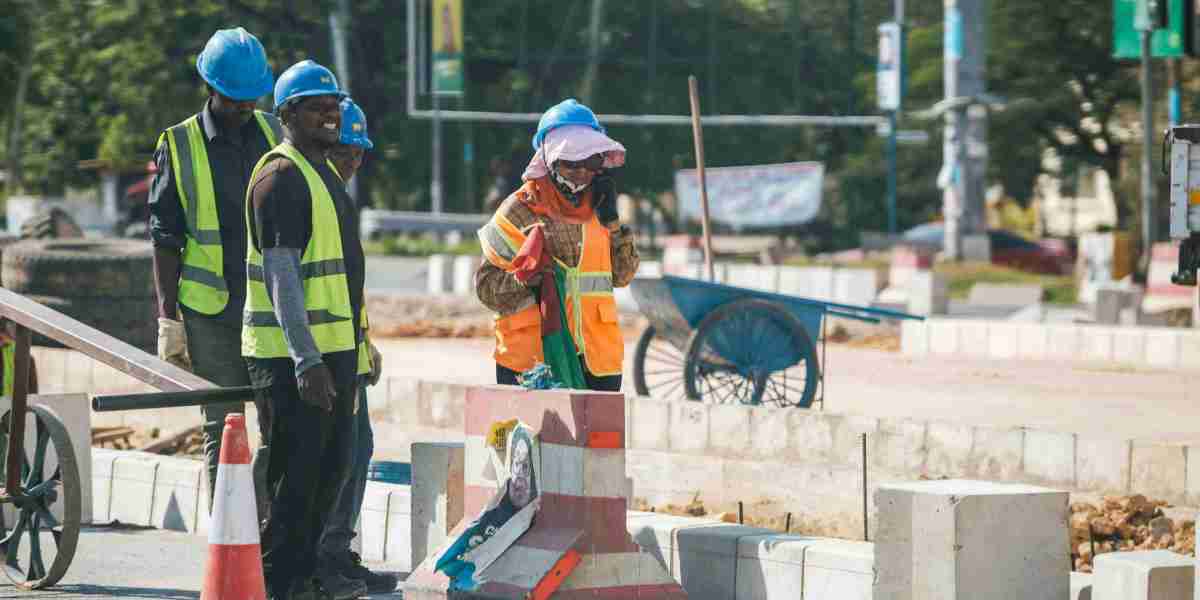

Site preparation in the United States, on average, costs $3,000 to $15, 000 for residential projects. However, large or complicated site preparation works can cost over $50, 000. On a per-square-foot basis, most homeowners pay from $1.50 to $5.00 per sq. ft., depending on land conditions, location, and the scale of work.
Why Site Preparation Is Essential?
The first thing that should be done is to prepare the land. Site preparation has an effect not just on the immediate stage of construction, but it is the basis of a structure's strength, safety, and lasting quality. If land is not properly prepared, it may result in poor drainage, foundation cracks, and very expensive repairs.
Accurate budgeting is very important for homeowners, builders, and developers in the U.S. before starting any construction project. This is where professional building estimation services become very helpful. These estimation services help calculate the real project cost at the early stage, including labor, materials, equipment, and other expenses. With proper planning, it becomes easier to avoid unexpected costs, budget overruns, and project delays after construction begins. Reliable estimation services also help improve decision-making and keep the construction process smooth and cost-effective.
What Is Site Preparation?
Site preparation is the process of converting raw or unplanned land into a site suitable for construction. It consists of various stages, work done to a large extent based on the condition of the land and the type of building.
Simply put, site preparation means removing barriers, grading the area, providing for water drainage, and stabilizing the land to a sufficient level for building. In residential developments, this operation is critical because it not only influences the houses themselves but also the nearby properties and infrastructure.
Typical Site Preparation Expenses in the U.S.
Prices may change greatly based on project size and the region. Anyway, national averages are a great point to start.
Cost Type | Average Range (U.S.) |
Per Square Foot | $1.50 – $5.00 |
Residential Total | $3,000 – $15,000 |
Cost Per Acre | $5,000 – $20,000+ |
Complex Projects | $30,000 – $75,000+ |
Urban regions like California or New York usually have higher labor and permit prices, whereas rural areas may be cheaper but would involve extra expenditure for utilities and access roads.
Detailed Breakdown of Site Preparation Expenses
Land Clearing
Land clearing comes first. It means getting rid of trees, bushes, stones, and other waste from the area.
Task | Typical Cost |
Light clearing | $1,000 – $3,000 per acre |
Heavy clearing | $3,000 – $5,000+ per acre |
Lots covered in dense woods or land with large tree roots can greatly contribute to higher expenses.
Grading and Leveling
Grading is the process of leveling the land and making sure the slope is right for drainage. This is a very important step to stop water from building up near the foundation.
Type | Cost Range |
Basic leveling | $2,000 – $5,000 |
Advanced grading | $5,000 – $10,000 |
Excavation
Excavation is the process of digging up and taking out soil to make room for foundations, basements, or utility lines.
Work Type | Cost |
Standard excavation | $3,000 – $10,000 |
Complex excavation | $10,000 – $15,000+ |
Many contractors hire sitework estimating services in USA for accuracy in material quantities, labor, and equipment costs by the time they get to this stage, quite a few of them, especially for bigger residential developments.
Soil Testing and Preparation
Before building, it's common practice to have soil tested in order to find out how stable it is and what its load-bearing strength is.
Test Type | Cost |
Basic soil test | $700 – $1,500 |
Advanced geotechnical testing | $1,500 – $2,000+ |
Land that is loose or not well-structured might need extra measures like getting it compacted or even changed.
Utility Installation
Hooking up utilities might be the most changeable element as far as price goes.
Utility | Cost Range |
Water & sewer | $2,500 – $7,000 |
Electricity | $1,500 – $5,000 |
Gas lines | $1,000 – $3,000 |
The distance of your site from existing infrastructure will directly influence how much these costs will be.
Permits and Inspections
Since each U.S. state and city has its own set of rules, these permits are, by law, required.
Permit Type | Cost |
Basic permits | $1,000 – $3,000 |
Complex approvals | $3,000 – $5,000+ |
Key Factors That Affect Site Preparation Costs
Land Condition
The costliest soils are steep, rocky, or very wooded, while those with little vegetation, flat and clear land, require the least amount of labor and equipment.
Location in the U.S.
The costs of different activities also differ across a country due to various factors such as work wages, environmental rules, and permits. Besides, normally it is more expensive to live in cities or coastal areas.
Accessibility
If the site cannot be reached by heavy machinery, a contractor will have to create temporary access roads, which will increase the price.
Distance to Utilities
Getting utilities to a property that is located far from municipal lines makes trenching and materials the main cost driver.
Project Size and Complexity
If you want a bigger home and/or a basement or a house with many features, then your groundwork part will be more extensive and more costly.
Additional Costs to Consider
Drainage and Erosion Control
Installing the correct drainage system will prevent your property from getting damaged by water.
System | Cost |
Basic drainage | $2,000 – $5,000 |
Advanced systems | $5,000 – $8,000 |
Driveways and Access Roads
Having access is crucial not only for construction but also for long-term functionality.
Type | Cost |
Gravel driveway | $2,000 – $5,000 |
Paved access road | $10,000 – $25,000 |
Foundation-Specific Preparation
Different types of foundations require different levels of preparation. For instance, a basement foundation needs more extensive excavation than a slab foundation, thereby increasing the price.
Tips to Save Money
Planning will be your main weapon to slash the budget drastically. In the first place, a piece of land that is already cleared or just slightly hilly will see a lower cost of land preparation in a major way. Utilizing the expertise of seasoned workers, obtaining a number of price quotes, and ensuring that quoted prices are competitive are steps that will guarantee a final price with which you will be happy. Likewise, utilities scheduling can be planned to avoid ending up with a couple of bills that were not budgeted for each time the home is under construction.
Across numerous U.S. locations, it is those homeowners who make an effort to plan and prepare cost estimation properly who, as a result, usually enjoy fewer disruptions in the construction process and less unpleasant financial emotions.
Conclusion
Sitework, being a major step that can make or break a construction, is key. Construction site preparation costs spread over a large scale, from a few thousand US Dollars to tens of thousands, but if the latest are explained and the homeowner understands them, only then will they be able to make appropriate decisions. Each stage, from land clearing to utility laying, is of utmost importance as it determines the long-term stability of the constructed one.
FAQs
1. How much does it cost to prepare land for a house in the U.S.?
The majority of homeowners pay around $3, 000 to $15, 000 for land preparation; the exact amount depends largely on the size and condition of the land.
2. What is the most expensive part of site preparation?
Labor and equipment for excavation and utility installation generally result in these being the most expensive activities.
3. Is site preparation included in construction costs?
Occasionally, but in a lot of cases, builders separate these costs, so you need to check your contract carefully.
4. How long does site preparation take?
The average duration is between 1 and 4 weeks, although things like weather, permits, and the project's complexity can stretch the timeline.
5. Can I reduce site preparation costs?
Yes, for example, by choosing a piece of flat land, doing as little clearing as possible, and getting multiple contractor bids, you can greatly reduce your costs.