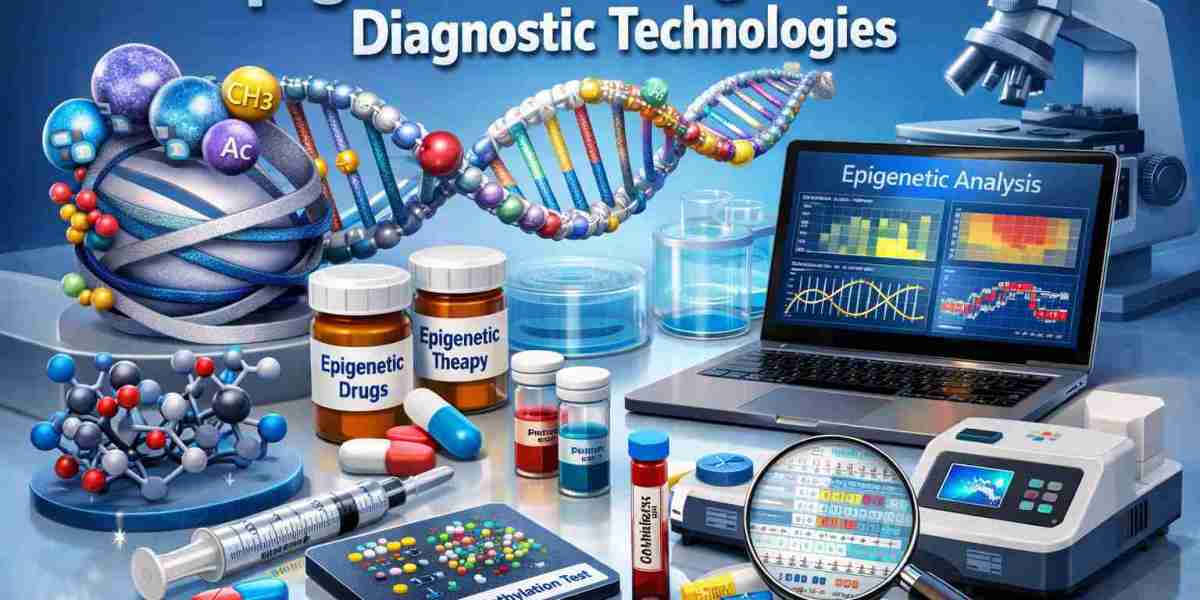

Emerging as a key segment in modern healthcare, the Epigenetics Drugs and Diagnostic Technologies Market leverages molecular biology, genomics, and personalized medicine to develop innovative solutions. This market focuses on understanding and modulating epigenetic changes, which alter gene activity without modifying the underlying DNA, for diagnosing and treating diseases such as cancer, metabolic disorders, and neurological conditions. Ongoing research and the increasing incidence of chronic diseases are driving strong growth prospects for this sector.
Market Overview and Growth Pace
As of 2023, the global epigenetics drugs and diagnostic technologies market was valued at around USD 15.4 billion and is projected to expand at a strong compound annual growth rate (CAGR) of approximately 14.5% from 2024 to 2030. This rising trajectory is fueled by the growing incidence of cancer and chronic diseases that rely on precise detection and targeted therapies, along with advancements in epigenomic technologies and personalized healthcare solutions.
Diagnostics currently dominate the market, accounting for the largest share of revenues due to the high demand for early disease detection, biomarker discovery, and monitoring tools. Improved reagent technologies, kits, instruments, and services are central to this segment's growth. Meanwhile, epigenetic drugs—particularly Histone Deacetylase (HDAC) inhibitors and DNA Methyltransferase (DNMT) inhibitors—are gaining traction as key therapeutic options, especially in combination with traditional treatments to enhance efficacy and overcome resistance.
Key Market Segments
1. Product & Service Type
- Diagnostics: Dominates with nearly 95% revenue share, driven by chronic disease prevalence, technological innovation, and a growing geriatric population requiring early and precise diagnosis.
- Drugs: Although smaller in revenue share, this segment is expanding steadily, focusing on epigenetic-modulating therapies that could transform treatment paradigms in oncology and beyond.
2. Application Areas
- Oncology: Leads the application segment with the largest market share due to the foundational role of epigenetic alterations in cancer development and therapeutic response. Epigenetic diagnostics help identify biomarkers for early cancer detection and guide tailored treatments.
- Non-Oncology: Expected to grow at a faster rate as research expands into neurological, metabolic, autoimmune, and infectious diseases—areas where epigenetic pathways offer new insights and potential targets for intervention.
3. Regional Insights
- North America: Holds the largest share of the epigenetics market, supported by advanced healthcare infrastructure, high investment in R&D, and widespread adoption of precision medicine approaches.
- Europe: Shows strong performance driven by structured research ecosystems and public-private collaborations in epigenetics research.
- Asia Pacific: Poised for significant growth due to expanding healthcare access, rising research funding, and increasing diagnostic adoption across emerging markets.
Growth Strategies Fuelling Market Expansion
Leading companies in the epigenetics drugs and diagnostics sector are adopting various strategic initiatives to strengthen their market positions and foster innovation:
- Collaborations & Partnerships: Many firms are partnering with academic institutions, biotech startups, and data platforms to accelerate discoveries and extend capabilities. For example, Oxford Nanopore Technologies teamed up with UK Biobank to create large-scale epigenomic datasets, supporting deeper insights into disease mechanisms.
- Acquisitions & Mergers: Major industry players are acquiring specialized biotech companies to enhance their pipelines and scale up therapeutic and diagnostic offerings. Novartis’s acquisition of Mariana Oncology in 2024 is one such strategic move aimed at strengthening its oncology research infrastructure.
- Technological Partnerships: Collaborations between diagnostic tech developers and cloud-based data analytics companies—such as Element Biosciences’ partnership with DNAnexus—are improving data processing, sequencing integration, and clinical insights capabilities.
- Product Development & Innovation: Companies are actively launching new epigenetic assays, reagents, and sequencing tools that offer greater sensitivity and faster turnaround times. These innovations help clinicians detect subtle epigenetic changes related to disease progression or therapeutic response.
Top Players in the Market
The competitive landscape features a mix of large pharmaceutical, biotech, and diagnostic technology firms investing heavily in R&D, product innovation, and strategic growth.
Some notable market leaders include:
- Roche: Focuses on integrating epigenetic insights into its cancer diagnostic and therapeutic platforms.
- Novartis: Expands its drug portfolio through acquisitions and strategic investments in novel therapies.
- Illumina: A key player in sequencing and genomic technologies that supports epigenetic analysis for diagnostics and research.
- Thermo Fisher Scientific: Provides comprehensive tools and reagents for epigenetic research and clinical workflows.
- Merck KGaA: Invests in biopharmaceutical research with an emphasis on epigenetic-related therapeutics.
Challenges and Future Outlook
Despite the positive growth trajectory, the market faces challenges such as high development costs, complex regulatory pathways, and the need for standardized clinical validation across diverse applications. However, expanding clinical evidence, increasing funding from governments and private venture capital, and the integration of AI and bioinformatics into epigenetic data interpretation are expected to mitigate these challenges and unlock further opportunities.
In summary, the Epigenetics Drugs and Diagnostic Technologies Market is transitioning into a high-growth phase, powered by technological innovation, strategic collaborations, and rising demand for precision healthcare solutions. With continued focus on early disease detection and targeted therapies, this market is set to play a transformative role in how diseases are diagnosed, monitored, and treated across the globe.
About Us:
The Insight Partners is a one stop industry research provider of actionable intelligence. We help our clients in getting solutions to their research requirements through our syndicated and consulting research services. We specialize in industries such as Semiconductor and Electronics, Aerospace and Defense, Automotive and Transportation, Biotechnology, Healthcare IT, Manufacturing and Construction, Medical Device, Technology, Media and Telecommunications, Chemicals and Materials.
Contact Us: If you have any queries about this report or if you would like further information, please contact us:
Contact Person: Ankit Mathur
E-mail: [email protected]
Phone: +1-646-491-9876
Also Available in : Korean | German | Japanese | French | Chinese | Italian | Spanish